

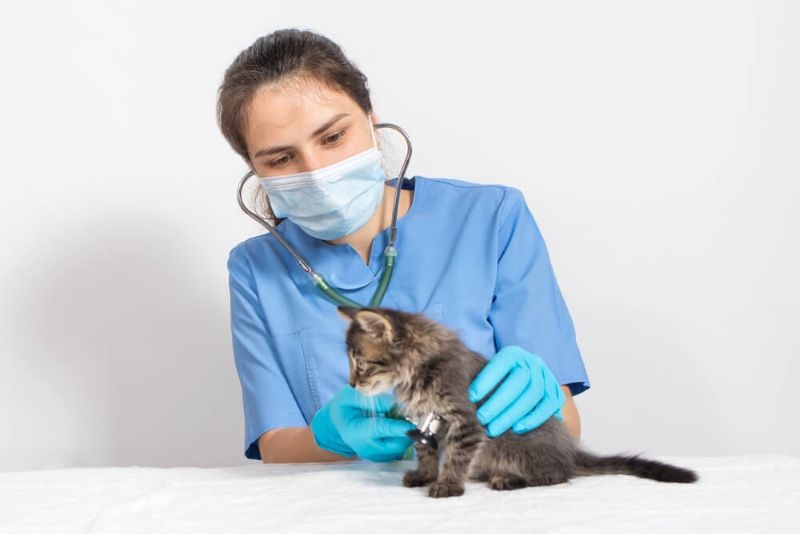
Heart murmurs in cats are sounds that are heard when the heart is checked using a stethoscope. These sounds are not rare, and many cats have them at some point in life. A murmur does not always mean there is a serious problem. In many cases, cats live normally without any trouble.
This blog explains what heart murmurs are, how cat heart murmur symptoms may appear, the causes of heart murmurs in cats, how they relate to cat heart disease, and how care is usually handled. It also explains whether a murmur is dangerous for cats and what treatment usually looks like.
Must Read: Why Is Cat Litter Box Training So Important for Your Cat?
Cat heart murmur symptoms are often very subtle. Many cats do not show clear signs at all. They continue eating, playing, and sleeping like they always have. This is why murmurs are often found during regular health checkups and not because something looked wrong at home.
Some cats may slowly show changes over time. Energy levels may drop a little. A cat may choose to rest more often. Playtime may become shorter. These changes are easy to miss because they happen gradually.
Breathing can also change. Some cats breathe faster while resting. Others may seem slightly uncomfortable after the activity. Appetite may reduce without a clear reason. Weight loss may happen slowly.
Cat heart murmur symptoms do not appear the same in every cat. One cat may show breathing changes, while another shows none at all. Stress can make symptoms easier to notice. A nervous cat may show signs during a vet visit but appear normal at home.
Watching daily habits matters. Any steady change, even a small one, should be shared during checkups. Early awareness helps guide the next steps calmly.
Heart murmurs in cats can happen for many reasons. Some are temporary and harmless, while others may need closer attention. Below are the most common causes, explained in a clear and simple way.
Sometimes the heart itself is normal, but blood moves faster than usual. This can create extra sounds. Stress, excitement, or fear during an exam can trigger this type of murmur.
Fever, low red blood cell levels, or body weakness can change how blood flows. These issues may cause a murmur for a short time. Once the condition improves, the sound often fades.
Young cats can have murmurs while their hearts are still developing. These are common and often disappear as the kitten grows older without causing any problems.
In some cats, the heart walls may become thicker, or the valves may not move smoothly. These changes can affect blood flow and create a murmur that may need monitoring.
Understanding these causes helps remove fear. Many murmurs are not dangerous and only need regular observation.
Cat heart disease is one possible reason a murmur is heard, but it is not the only reason. A murmur is a sound, not a diagnosis. It only tells that blood flow sounds different than usual. Some forms of cat heart disease develop slowly. A cat may appear healthy for years. In these cases, a murmur may be the first sign found during a routine exam.
Cat heart disease can affect how the heart pumps blood. When pumping becomes uneven, extra sounds may occur. These sounds help guide further testing, but do not confirm disease on their own. Not all cats with heart disease have loud murmurs. Some serious conditions may produce soft sounds or none at all. This is why regular exams are important. Monitoring heart health helps track changes early. Early detection supports calm planning and better long-term comfort.
Diagnosis begins with listening to the heart during a calm exam. The timing, strength, and location of the sound help guide next steps. Stress can make murmurs louder, which is why repeat exams may be suggested.
Further checks may include imaging tests to look at the heart shape and movement. These tests help understand if cat heart disease is present. Blood pressure checks and basic blood tests may also be used.
Not every cat needs advanced testing. Some only need monitoring over time. The goal of diagnosis is understanding, not alarm.
Clear results help guide simple decisions and steady care plans.
Treatment for heart murmurs in cats depends on what is causing the sound. Not every murmur needs treatment. In many cases, simple monitoring is enough. Below are the common care approaches explained in a clear and easy way.
When no heart disease is found, treatment may not be needed. The cat is checked during routine visits to make sure the murmur does not change over time.
If the murmur is caused by fever, low blood levels, or hormone changes, treatment focuses on those issues. As the condition improves, the murmur may become softer or go away.
When heart disease is present, care focuses on helping the heart work more comfortably. This may include careful activity control and regular health checks.
The goal of feline heart murmur treatment is steady comfort and balance. Most cats continue normal lives with simple and consistent care.
You can check the following list to find out the three essential things that every cat owner should remember:
A murmur means extra heart sounds are heard. It does not confirm illness. Many cats live long, normal lives with monitored murmurs.
Cat heart murmur symptoms often develop slowly or not at all. Regular checkups help notice changes early.
Feline heart murmur treatment depends on why the murmur exists. Some cats need monitoring. Others need simple care steps.
Top Pick: Cat Scratching Solutions That Help Protect Every Home
Heart murmurs can sound worrying, but many are harmless. Understanding symptoms, causes, and care options helps reduce stress. With regular monitoring and simple guidance, most cats live healthy and comfortable lives.
Cat heart murmur symptoms include low energy, breathing changes, pale gums, and appetite changes. Many cats show no symptoms.
The causes of heart murmurs in cats include stress, fever, blood flow changes, growth stages, and heart disease.
A heart murmur is dangerous for cats, depending on the cause. Many are harmless and only need monitoring.
Feline heart murmur treatment depends on exam results. Some cats need no treatment, while others need simple care.
This content was created by AI